

When water shows up somewhere it shouldn’t, cost is usually the first question on a homeowner’s mind, right after “how bad is this?” The honest answer is that water damage restoration cost in Baltimore varies quite a bit depending on the size of the affected area, the type of water involved, and how long it sat before anyone addressed it. Having a general sense of the numbers helps homeowners plan, budget, and know what to expect when a restoration company gives them an estimate.
What Factors Drive the Price
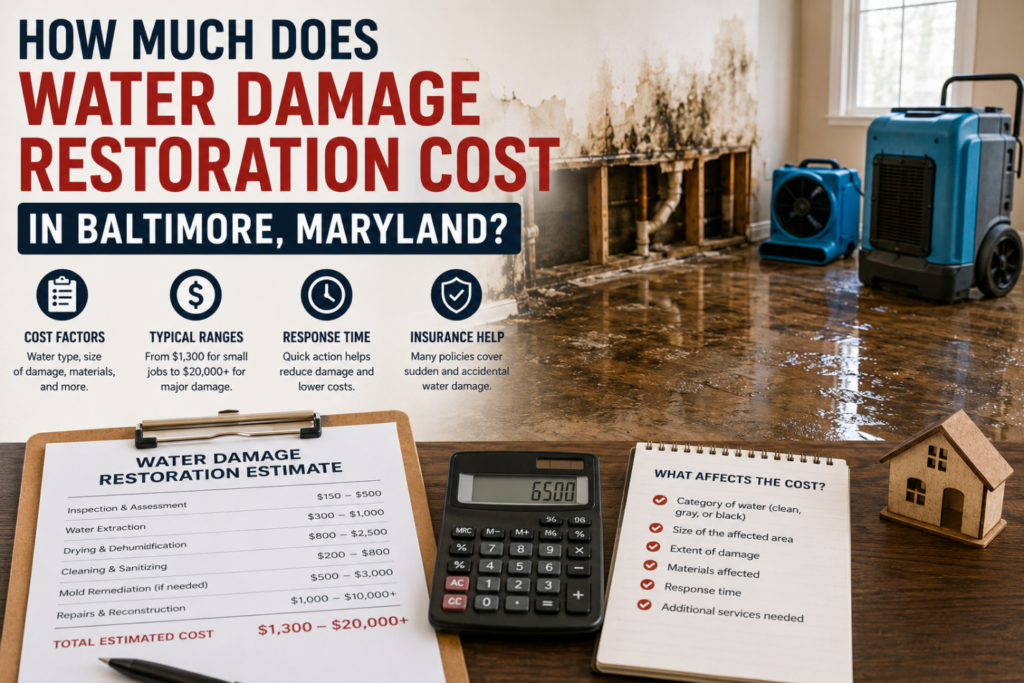
The single biggest factor is the category of water involved. Clean water from a supply line leak is the least expensive to remediate, since it doesn’t carry contaminants. Gray water, the kind that comes from appliances like dishwashers or washing machines, costs more because it requires more thorough cleaning. Black water, which includes sewage backups and floodwater, is the most expensive category by far, since it involves serious contamination risks and often requires removing and replacing porous materials like drywall and carpet rather than trying to salvage them.
Square footage matters too, obviously, but so does how far the water traveled. A leak confined to one bathroom is a very different job than water that migrated under flooring into an adjoining room or down into a finished basement. The materials affected also change the math: hardwood floors, finished basements, and drywall with insulation behind it all cost more to restore than a simple tile floor in an unfinished space.
Typical Cost Ranges
For a small, contained leak affecting a single room with clean water, water damage repair cost in the Baltimore area typically falls in the range of $1,300 to $3,500, covering water extraction, drying equipment, and minor repairs. Moderate damage affecting multiple rooms or involving gray water tends to run between $3,500 and $8,000, once you factor in more extensive drying time, some material replacement, and possibly minor mold remediation.
Larger jobs, such as a flooded basement, significant black water contamination, or damage that’s gone unaddressed long enough to cause structural issues, can range from $8,000 well into the $20,000s or higher. These figures are general ranges rather than guarantees, since every property and every situation is different, but they give homeowners a realistic starting point before an inspection.
How Response Time Affects the Final Number
Water damage that’s treated within the first 24 hours almost always costs less to fix than the same amount of water left sitting for three or four days, simply because more materials become saturated and unsalvageable the longer they stay wet. This is one of the reasons response time is worth weighing alongside price when comparing restoration companies, since a slightly higher hourly rate from a company that shows up in an hour can easily work out cheaper overall than a lower rate from a company that can’t get there until the next day.
What’s Usually Included in a Water Damage Cleanup Cost Estimate
A thorough estimate typically covers water extraction, industrial drying equipment rental for the days needed to fully dry the space, moisture testing to confirm the area is dry before closing up walls or laying new flooring, and any necessary demolition of damaged materials like drywall, insulation, or flooring. Mold prevention treatments and, if needed, mold remediation are often part of the process as well, along with the reconstruction work to put everything back together.
Does Homeowners Insurance Help?
Many homeowners insurance policies cover sudden and accidental water damage, such as a burst pipe or an appliance failure, though coverage for flooding from external sources like storms usually requires separate flood insurance. It’s worth reviewing your policy or calling your agent before assuming a loss is or isn’t covered, since the details vary a lot from policy to policy.
Why Getting a Fast, Local Estimate Matters
Water damage gets more expensive the longer it sits, both because more materials become saturated and because mold risk climbs with every passing hour. A local company that can respond quickly and provide a clear, itemized estimate saves money compared to waiting, guessing at the scope, or hiring someone unfamiliar with the specific challenges of older Baltimore homes.
Why Local Experience Changes the Estimate
A restoration company that regularly works in Baltimore rowhomes and older suburban properties tends to spot issues faster than one unfamiliar with the housing stock, whether that’s knowing to check for plaster-and-lath walls instead of drywall in a pre-war home or recognizing the kind of foundation cracking common to a particular neighborhood’s soil type. That familiarity often translates into a more accurate first estimate, rather than one that grows significantly once demolition begins and reveals conditions a less experienced crew wouldn’t have anticipated.
Questions to Ask Before Hiring a Restoration Company
A written, itemized estimate should always be part of the conversation, along with a clear explanation of how the company handles insurance documentation if you’re planning to file a claim. It’s reasonable to ask how the price could change once demolition reveals the full extent of the damage, since hidden damage behind a wall or under a floor sometimes isn’t visible until work begins. And it’s worth asking directly whether the company works with your specific insurance carrier, since some restoration companies have more experience navigating certain insurers than others.
Getting an Accurate Estimate for Your Property
General price ranges are useful for planning, but every property is different, and the only way to know the real cost is with an in-person or virtual assessment. MoveFast Restoration provides estimates for homeowners throughout Baltimore and the surrounding area, with straightforward pricing and no pressure. If you’re dealing with water damage right now or want to understand what a repair might cost before it happens, reach out through movefastrestoration.com or check the water damage restoration near me page for service details in your neighborhood.