

Not every spot of mold in a home requires calling in a professional crew. A small patch on a shower curtain or a bit of surface mildew in a rarely-used corner is often something a homeowner can handle with a scrub brush and some diluted bleach. But there’s a point where a mold problem stops being a cleaning task and becomes something that needs professional mold remediation, and knowing where that line sits can save a homeowner from a much bigger, more expensive problem later.
Signs of Mold Remediation Needs You Shouldn’t Ignore
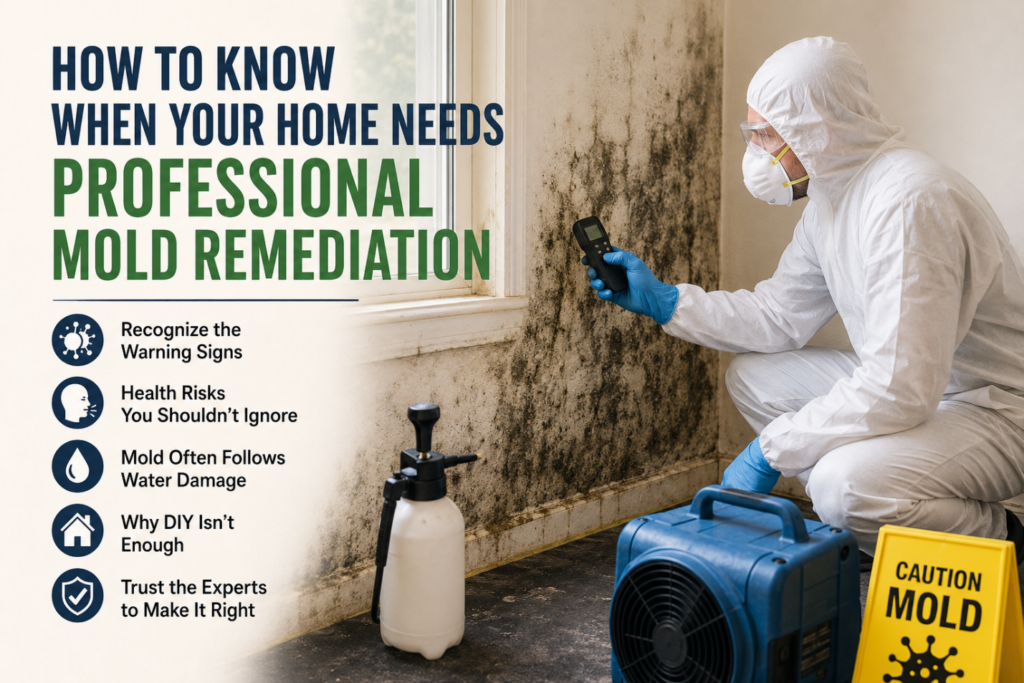
Size is the first and clearest indicator. The EPA generally uses 10 square feet as a rough threshold: mold covering an area larger than that, roughly the size of a small bathroom wall, is usually a job for professionals rather than a DIY cleaning session. Mold that keeps returning after you’ve cleaned it is another red flag, since that pattern almost always means there’s an ongoing moisture source feeding it that hasn’t been addressed.
A persistent musty odor, especially one that’s noticeable in a specific room or area but has no visible source, often means mold is growing somewhere out of sight, inside a wall cavity, under flooring, or above a ceiling. Visible mold on HVAC components or inside ductwork is particularly concerning, since a functioning HVAC system will actively circulate those spores throughout the entire house rather than keeping them contained to one room.
The Difference Between Common Household Mold and a Bigger Problem
Not all mold is created equal in terms of risk, and part of what a professional assessment does is figure out which type is actually present. Common surface molds like Cladosporium or Penicillium, often found in bathrooms or on window sills, are generally less concerning in small amounts than species like Stachybotrys, sometimes called black mold, which tends to show up after prolonged water damage and is associated with more significant health effects. A homeowner usually can’t tell these apart by sight alone, which is one more reason testing matters when the situation is ambiguous.
Health Symptoms That Point to a Mold Problem
Household members experiencing unexplained respiratory irritation, persistent coughing, headaches, or allergy-like symptoms that improve when they’re away from the house are worth paying attention to. This is especially true for anyone with asthma, existing allergies, or a compromised immune system, since mold exposure tends to affect these groups more noticeably and more quickly than others in the same household.
Mold After Water Damage
Any significant water event, a burst pipe, flooding, a roof leak that went unnoticed for a while, creates ideal mold growing conditions within 24 to 48 hours if materials aren’t thoroughly dried. If a water damage incident wasn’t professionally dried and monitored with moisture meters at the time, there’s a real chance mold has already started growing in spaces that look dry on the surface but are still damp underneath.
Why DIY Approaches Fall Short for Larger Problems
Surface cleaning with bleach or commercial mold removers can make visible mold disappear from a countertop or tile, but it doesn’t address mold that’s grown into porous materials like drywall, wood framing, or insulation, where the roots go deeper than any surface cleaner can reach. Attempting to remove larger mold colonies without proper containment can also disturb the colony and send spores throughout the house, turning a contained problem into a whole-house one. And critically, cleaning the visible mold without finding and fixing the moisture source just means it comes back.
What Professional Mold Removal Services Actually Involve
A proper remediation process starts with identifying and stopping the moisture source, since there’s no point removing mold that will just regrow. From there, the affected area is contained to prevent spores from spreading to unaffected parts of the house, followed by air filtration to capture airborne spores during the work. Contaminated materials that can’t be cleaned are removed and replaced, remaining surfaces are treated with antimicrobial solutions, and the whole process wraps up with a clearance test to confirm mold levels have returned to normal before the area is considered done.
When to Hire Mold Remediation Professionals Right Away
Beyond the size and symptom guidelines above, mold discovered in HVAC systems, mold following any significant flooding, mold in a home with infants, elderly residents, or anyone immunocompromised, and mold that’s returned more than once after cleaning are all situations where it makes sense to call a professional rather than try again with a spray bottle.
What to Expect From a Mold Inspection
A proper inspection usually starts with a walkthrough and a conversation about where odors or visible growth have been noticed, followed by moisture readings in the suspect areas and, when appropriate, air quality or surface sampling sent to an independent lab. The goal isn’t just to confirm mold is present, since most homeowners already suspect that by the time they call, but to map out how far it’s spread and what’s feeding it, which is the information that actually shapes the remediation plan.
Getting a Professional Assessment
If you’re not sure whether what you’re looking at needs a full remediation or just a good cleaning, an assessment from someone who does this daily is the fastest way to find out. MoveFast Restoration offers mold inspections and remediation services throughout the Baltimore area, using containment and testing protocols that make sure the problem is actually solved rather than just hidden for a while. You can reach out through movefastrestoration.com to schedule an assessment.