

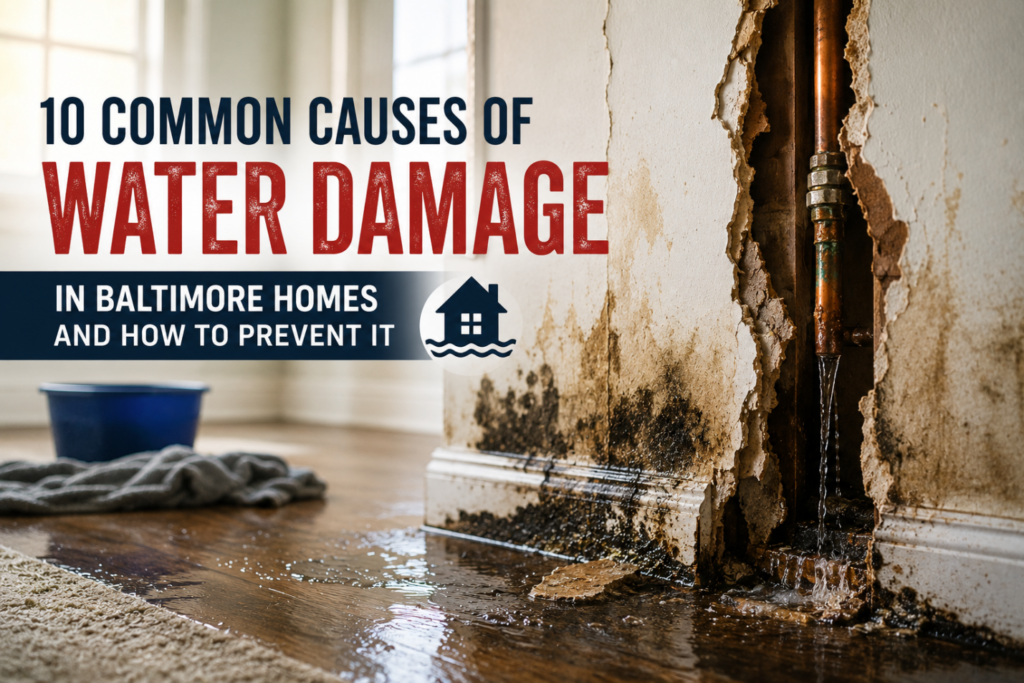
Water damage is one of the most frequent reasons Baltimore homeowners end up filing an insurance claim, and it’s rarely caused by anything dramatic. Most of the time it’s a slow leak, an aging appliance, or a maintenance item that got put off one season too long. Knowing the common water damage causes specific to this region, and what actually prevents them, is a lot cheaper than paying for the cleanup afterward.
1. Aging or Corroded Plumbing
A lot of Baltimore’s housing stock predates modern plumbing codes, which means galvanized steel or old copper pipes are still doing the job in plenty of basements and walls. These materials corrode from the inside over decades, and a pinhole leak can go unnoticed until it’s caused real damage. Having a plumber inspect exposed pipes every few years, especially in a home over 40 years old, catches corrosion before it becomes a leak.
2. Failing Appliance Hoses and Connections
Washing machines, dishwashers, refrigerators with ice makers, and water heaters all rely on hoses and fittings that wear out. Rubber supply hoses are the most common failure point and are worth replacing with braided stainless steel versions, which last far longer and are much less likely to rupture without warning.
3. Clogged or Damaged Gutters
Baltimore’s tree cover means gutters fill with leaves and debris fast, and a clogged gutter sends rainwater cascading down the side of the house instead of away from the foundation. Over time that water finds its way into basements and crawlspaces. Cleaning gutters twice a year, in spring and late fall, is one of the simplest ways to prevent water damage before it starts.
4. Poor Grading Around the Foundation
If the ground around a house slopes toward the foundation instead of away from it, every rainstorm sends water straight to the basement walls. This is an easy thing to miss because it develops gradually as soil settles over the years. A quick check after a storm, looking for standing water near the foundation, tells you whether regrading or a French drain might be needed.
5. Roof Damage and Missing Shingles
Wind storms and ice buildup are hard on roofs, and a handful of missing or damaged shingles is enough to let water seep into the attic during the next heavy rain. Roof damage is one of those home water damage causes that’s easy to prevent with a yearly visual inspection, either from the ground with binoculars or by hiring someone to check after a bad storm.
6. Sump Pump Failure
Homes with basements often rely on a sump pump to keep groundwater out, and that pump is only useful when it’s working. Power outages during storms, mechanical failure, or a pump that’s simply reached the end of its lifespan all lead to the same result: a flooded basement at the worst possible time. A battery backup system and an annual test run go a long way toward avoiding that.
7. HVAC Condensation Issues
Air conditioning systems produce condensation that’s supposed to drain away through a condensate line. When that line clogs, which happens more often than most homeowners realize, water backs up and can damage ceilings, walls, or flooring near the unit. Flushing the condensate line once a season keeps this from becoming a problem.
A Quick Word on Insurance
Not every one of these causes is treated the same way by a homeowners policy. Sudden failures, a hose that bursts or a water heater that ruptures without warning, are generally covered, while damage attributed to long-term neglect, like a slow foundation leak nobody addressed for years, often isn’t. Knowing which category a given cause falls into is worth understanding before you need to file a claim, since it shapes both how urgently something should be fixed and what documentation to keep along the way.
8. Water Heater Failure
Water heaters have a lifespan of roughly 8 to 12 years, and tanks tend to fail without much warning once they’re near the end. Rust-colored water, popping sounds, or a tank that’s visibly aging are signs it’s time to replace it before it fails on its own terms.
9. Window and Door Seal Deterioration
Caulking and weatherstripping around windows and doors break down over time, especially with Baltimore’s humid summers and cold winters. Once the seal is compromised, wind-driven rain works its way in during storms. Re-caulking every few years is a small job that prevents a much bigger one.
10. Storm and Flash Flooding
Baltimore sees its share of intense summer storms, and low-lying properties or homes near Jones Falls and other waterways are especially exposed to flash flooding. Elevating utilities, installing check valves on sewer lines, and knowing your property’s flood risk are all worth doing before storm season rather than after.
Building a Seasonal Maintenance Habit
Most of these prevention steps naturally sort themselves into a spring and fall routine: gutters and roof checks before and after the leafy season, sump pump testing before the rainy months hit, and HVAC condensate lines flushed at the start of summer when the system starts running hard. Keeping a simple checklist, even just a note in your phone, and working through it twice a year turns a list of ten causes into a manageable habit rather than something to worry about all at once.
Prevention Is Cheaper Than Restoration
Most of these causes share something in common: they’re all preventable with routine maintenance and a bit of attention twice a year. When prevention doesn’t catch everything, and sometimes it doesn’t, MoveFast Restoration is available throughout the Baltimore area for fast, professional water damage restoration. Visit movefastrestoration.com to learn more or reach out if you’re dealing with a leak or flooding right now.