

Water damage rarely announces itself. A burst pipe or a flooded basement is obvious, but a lot of the water damage that does the most harm to a home happens quietly, behind drywall, under flooring, or inside a crawlspace, for weeks or even months before anyone notices. By the time a stain shows up on the ceiling or a floorboard starts to feel spongy underfoot, the damage has usually been building for a while. Learning to catch hidden water damage early is one of the best things a homeowner in the Baltimore area can do to avoid mold growth and expensive structural repairs down the line.
Why Hidden Water Damage Is So Common in Older Homes
Baltimore is full of rowhomes and older single-family houses, many with plumbing, roofing, and foundations that have been through decades of freeze-thaw cycles, humid summers, and the occasional nor’easter. Older pipes corrode from the inside, roof flashing loosens over time, and foundation cracks widen a little more with each season. None of that shows up right away. Water finds the path of least resistance, which usually means it travels along a joist, soaks into insulation, or pools under a subfloor rather than dripping straight down where you’d spot it. That’s exactly why hidden moisture damage is such a persistent problem in this region: the housing stock and the climate both work against early detection.
Signs of Hidden Water Damage Worth Taking Seriously
Most homeowners don’t need a moisture meter to catch a problem early. A musty smell that lingers in one room no matter how much you clean or air it out is often the first clue, since mold and mildew produce that odor long before you can see them. Paint or wallpaper that bubbles, peels, or develops a slightly wavy texture is another sign that moisture is sitting behind the wall. Discoloration on ceilings or baseboards, even faint yellow or brown patches, points to water intrusion somewhere above or behind that surface.
Flooring tells its own story. Wood floors that cup, warp, or feel soft in spots, and tile that develops loose or hollow-sounding sections, usually mean moisture is working its way through the subfloor. If a door or window suddenly starts sticking when it used to open smoothly, that can be a sign that wood framing nearby has absorbed water and swelled. And if your utility bills climb without an obvious reason, a slow leak inside a wall or under a slab is worth ruling out.
Where Water Damage Behind Walls Tends to Start
The areas around plumbing fixtures are the usual suspects: under kitchen and bathroom sinks, behind the washing machine, around the water heater, and near any exterior wall where a pipe runs close to the surface. Exterior walls near rooflines are another common entry point, especially where flashing has aged or gutters have been clogged long enough to send water back toward the house instead of away from it. Basements and crawlspaces deserve regular attention too, since grading issues, foundation cracks, and sump pump failures often show up there first, long before the effects reach the living space above.
A Simple Routine for Catching Problems Early
A quarterly walk-through of the house, focused specifically on moisture, catches most problems before they become expensive. Check under every sink and around every appliance that uses water. Look at ceilings in rooms below bathrooms. Run a hand along baseboards in basements and lower-level rooms to feel for dampness or softness. After a heavy rain, take a look at the basement or crawlspace within a day or two rather than waiting for the next dry stretch to check. None of this takes more than twenty or thirty minutes, and it’s the kind of habit that pays for itself the first time it catches something.
Why Hidden Damage Turns Into Mold and Structural Problems So Fast
Mold doesn’t need much: a damp surface and a few days of the right temperature is usually enough for spores to establish themselves and start spreading. Wood framing that stays wet loses structural integrity gradually, fastener by fastener, until a repair that would have cost a few hundred dollars turns into a full section of wall or subfloor replacement. Because the damage is invisible while it’s happening, the timeline between a small leak and a serious problem is often shorter than people expect.
Tools That Help Homeowners Check Beyond the Surface
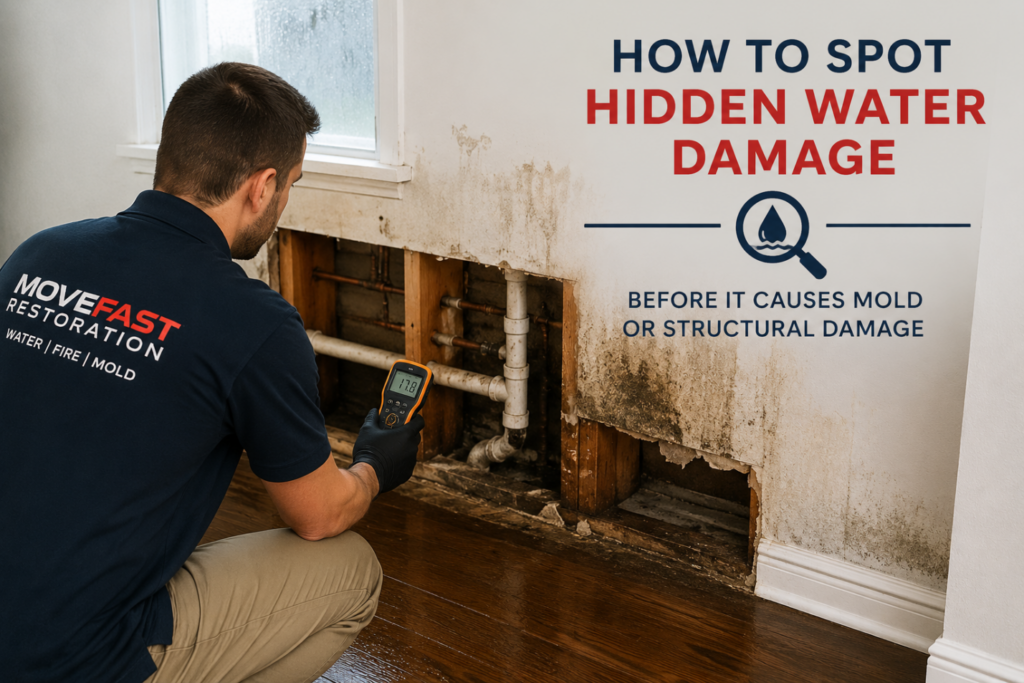
A basic moisture meter, the kind sold at most hardware stores for under fifty dollars, can be a useful first step for a homeowner who wants to check a suspicious spot before calling anyone. Pressing the probes into a baseboard or drywall near a known plumbing line gives a reading that’s either reassuring or a reason to dig further. These consumer-grade tools aren’t as sensitive as the thermal imaging cameras and pin-less meters professionals use, which can scan an entire wall section in seconds and show a heat map of where moisture is sitting behind the surface, but they’re a reasonable way to decide whether a spot is worth a professional look.
When to Call in a Professional
A musty smell with no visible source, a stain that keeps reappearing after you paint over it, or a floor that feels different underfoot than it did a year ago are all reasons to get a professional opinion rather than waiting to see if it gets worse. MoveFast Restoration works throughout the Baltimore area and can assess a property for hidden moisture using thermal imaging and moisture meters that see what the eye can’t. Finding out early, and having it addressed before mold sets in or framing is compromised, is almost always faster and less disruptive than dealing with the damage after it’s spread.
If something in your home feels off, whether it’s a smell, a stain, or a floor that’s not quite right, it’s worth having it checked out. You can reach MoveFast Restoration through movefastrestoration.com to schedule an inspection or read more on the blog about protecting your home from water damage.