

One of the first calls a homeowner makes after discovering water damage, right after calling a restoration company, is usually to their insurance agent. And one of the most common questions that follows is whether homeowners insurance water damage coverage will actually apply to their situation. The answer is genuinely “it depends,” but there are some clear patterns worth understanding before you’re standing in a flooded basement trying to figure it out in the moment.
The General Rule: Sudden vs. Gradual Damage
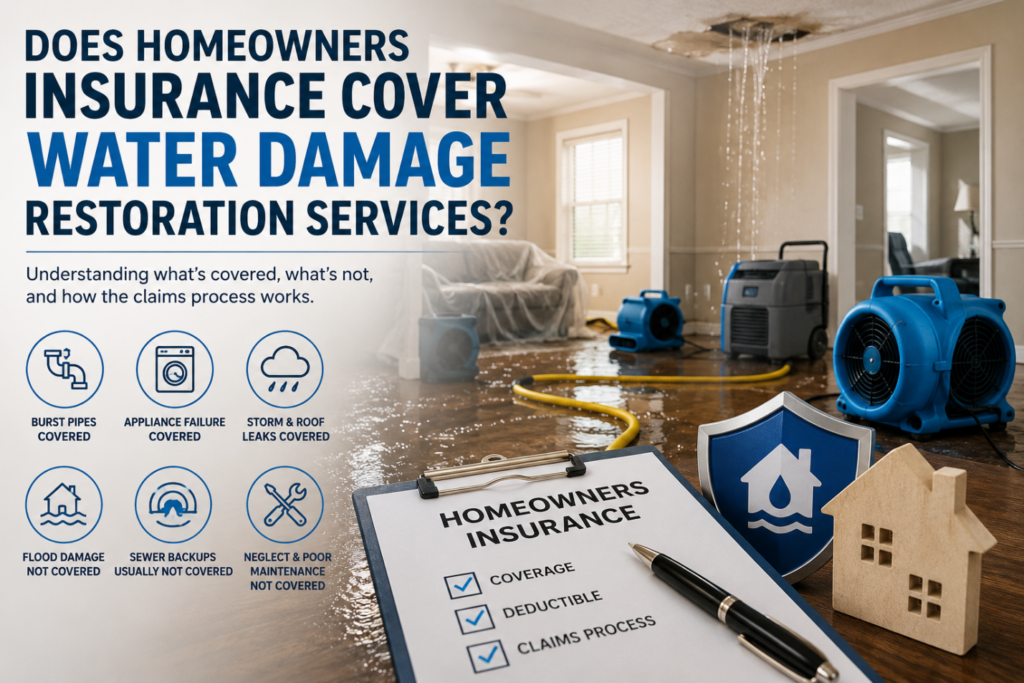
Most standard homeowners policies cover water damage that’s sudden and accidental, meaning it happened unexpectedly rather than building up over time. A pipe that bursts without warning, a washing machine hose that fails, or a water heater tank that ruptures are all typically covered scenarios, since none of those are things a homeowner could reasonably have prevented or seen coming.
Gradual damage is a different story. If an insurance adjuster determines that a leak had been slowly dripping for months, or that damage resulted from a maintenance issue a homeowner should have caught and fixed, coverage is often denied. Insurers generally expect homeowners to maintain their property, and damage attributed to neglect, an old roof that was never repaired, a known leak that was ignored, doesn’t usually qualify for water restoration insurance coverage.
What’s Typically Covered
Beyond burst pipes and appliance failures, coverage generally extends to water damage from firefighting efforts, accidental overflow from a plumbing or HVAC system, and ice dam damage from winter storms. Storm-related roof leaks are often covered too, provided the roof itself was in reasonable condition before the storm.
What’s Usually Not Covered
Flooding from an external source, rising water from a river, heavy rain overwhelming the ground, or storm surge, is almost never covered by a standard homeowners policy. That kind of damage requires separate flood insurance, typically through the National Flood Insurance Program or a private flood policy. Sewer and drain backups are also frequently excluded unless a homeowner has purchased a specific endorsement for that coverage, which is worth asking about given how common sewer backups can be in older neighborhoods. Damage from long-term neglect, and damage caused by earth movement like a landslide or earthquake, round out the common exclusions.
Understanding Your Deductible
Even when water damage is fully covered, most policies still apply a deductible, and it’s worth knowing that number before an emergency happens rather than discovering it for the first time on a claim form. For smaller losses, sometimes the total repair cost ends up close to or even below the deductible, in which case filing a claim may not make financial sense once the potential effect on future premiums is factored in. A restoration company can usually give a rough repair estimate early enough to help make that call.
The Claims Process, Start to Finish
Once damage is discovered, the first priority is safety, followed by documentation. Photos and video of the damage before anything is touched or moved give the clearest picture for a claim. From there, contacting the insurance company to open a claim starts the clock, and most policies require homeowners to take reasonable steps to prevent further damage in the meantime, which is where a restoration company often comes in immediately rather than waiting for an adjuster to show up first.
An adjuster will typically inspect the property, sometimes in person and sometimes through documentation provided by the restoration company, and issue a settlement based on the policy’s coverage and the documented scope of damage. Working with a restoration company that has experience navigating insurance for water damage claims tends to make this process smoother, since they know what documentation adjusters look for and can communicate directly with the insurance company on the technical details.
Tips for a Smoother Claim
Document everything before cleanup begins, keep every receipt related to emergency mitigation, and read your policy’s specific language on water damage rather than assuming it works the same way a friend’s or neighbor’s policy does. Every policy is a little different, and the fine print on exclusions matters more than people expect until they’re the ones filing a claim.
Mitigation Duties: Why Acting Fast Protects Your Claim
Most policies include language requiring homeowners to take reasonable steps to prevent further damage once a loss is discovered, sometimes called a duty to mitigate. Leaving standing water for days while waiting to hear back from an adjuster can actually work against a claim if the insurer determines that inaction allowed the damage to worsen unnecessarily. This is part of why starting mitigation immediately, even before the claim is fully processed, is generally the right move rather than something to hold off on.
What If a Claim Gets Denied?
A denial isn’t always the final word. Homeowners can request a detailed written explanation of why a claim was denied, ask for a second inspection if the original assessment seems incomplete, and in some cases hire an independent adjuster to provide a competing opinion. A restoration company that documented the damage thoroughly from the start often has the photos, moisture readings, and cause-of-loss detail needed to support an appeal, which is one more reason getting that documentation right at the beginning matters so much.
Help Navigating the Process
Insurance claims add a layer of complexity to an already stressful situation, and having a restoration company that understands the process makes a real difference. MoveFast Restoration works with homeowners throughout the Baltimore area and can help document damage properly and communicate with insurance adjusters as part of the restoration process. Visit movefastrestoration.com to learn more about how the team can help if you’re dealing with a claim.