

Baltimore’s storms can move in fast, and heavy summer downpours or a lingering nor’easter can send water into a home before anyone’s had a chance to prepare. When storm water damage happens, what you do in the first hour or two, before a restoration crew can get there, often determines how much of the damage can be salvaged and how quickly the recovery goes. Here’s what actually helps in that window, and what to avoid.
Safety Comes First, Always
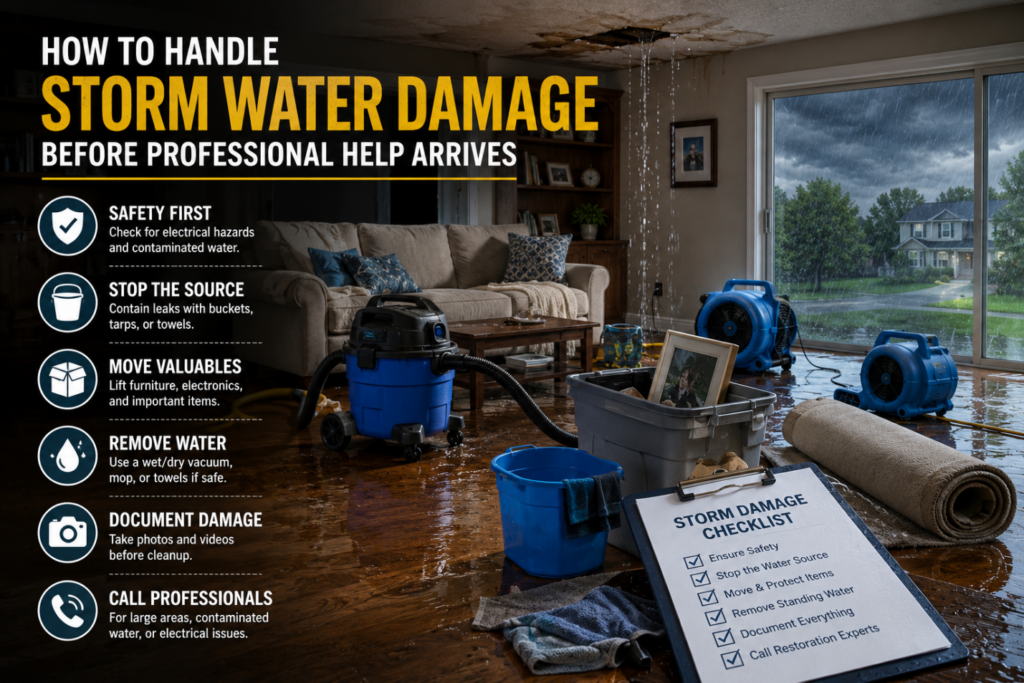
Before touching anything, make sure it’s safe to be in the affected area. If water is anywhere near electrical outlets, panels, or appliances, shut off power to that area at the breaker box if it’s safe to reach, and if there’s any doubt at all, stay out and call an electrician or the restoration company for guidance instead of guessing. Standing water from a storm can also be contaminated, especially if it’s come in from outside or backed up through a drain, so treat any storm floodwater as unsafe to touch with bare skin, and avoid it entirely if there are open cuts or if anyone in the household is immunocompromised.
Stop the Source If You Can
If the water is coming from a roof leak, placing a bucket or tarp to redirect it away from furniture and electronics buys time. If a window has failed or a door seal has given way, towels and plastic sheeting can slow the intrusion until the storm passes and repairs are possible. There’s a limit to what’s safe to attempt in the middle of an active storm, though, so don’t go up on a roof or outside in dangerous conditions just to address a leak that can wait an hour.
Keep an Eye on the Weather Forecast
Baltimore’s storm patterns tend to cluster, with one heavy system often followed by another within a few days during peak season. If the forecast shows more rain coming behind the storm that just caused damage, it’s worth mentioning that to whoever you call for help, since it affects how urgently tarping, drying, or temporary repairs need to happen before the next round arrives and makes things worse.
Move What You Can
Getting furniture, electronics, rugs, and boxes up off the floor and away from the affected area, even by a few feet, can prevent secondary damage while you wait for help. Aluminum foil or small blocks of wood under furniture legs create a barrier between wet flooring and furniture that would otherwise wick up moisture. Anything irreplaceable, photos, important documents, is worth moving to a dry area first if it’s safe and quick to do.
Start Emergency Storm Water Removal If It’s Safe
For shallow water, a wet/dry shop vacuum or even towels and a mop can remove a meaningful amount of standing water and reduce how much soaks into flooring and subflooring. Opening windows and running fans, once the storm has passed and it’s safe to do so, helps start the drying process and reduce humidity buildup in the meantime. This isn’t a substitute for professional extraction and drying, but it does reduce the total amount of water sitting in the space.
Document Before You Clean
Photos and video of the damage, the source of the water, and any affected belongings, taken before cleanup starts, make the insurance process significantly smoother later. It’s easy to forget this step in the middle of dealing with an active leak, but a phone camera and two minutes now saves a lot of back-and-forth with an adjuster later.
What Not to Do
Avoid using a regular household vacuum on wet areas, since it can damage the vacuum and create an electrical hazard. Don’t turn on ceiling fixtures or fans in a room where the ceiling has been wet, since water may have reached the wiring. And resist the urge to start ripping out drywall or flooring before a professional has assessed the extent of the damage, since some materials that look ruined can actually be saved if they’re dried quickly and correctly.
When to Call for Professional Help
Any storm damage involving more than a small, contained area, any water that’s contacted electrical systems, or any situation involving contaminated water is worth calling a professional restoration company for immediately rather than waiting to see how it looks in the morning. Storm flooding damage that’s addressed within the first 24 to 48 hours has a much better chance of full recovery, both for the structure and for mold prevention.
Preparing Before the Next Storm
Once the immediate cleanup is behind you, it’s worth taking a look at what let the water in to begin with, whether that’s an aging roof, a gutter system that couldn’t keep up, or a grading issue around the foundation. Baltimore’s storm season tends to repeat itself, and a home that flooded once in a heavy rain is statistically more likely to flood again under similar conditions unless the underlying weak point gets fixed rather than just cleaned up.
Fast Response When Storms Hit
MoveFast Restoration provides emergency storm damage response throughout the Baltimore area, and getting a crew out quickly is one of the biggest factors in limiting how much a storm actually costs a homeowner in the long run. If a storm has caused damage to your home, reach out through movefastrestoration.com for emergency service, day or night.