

Essex sits close to the water. Between the creeks, the shoreline, and the low-lying streets, many homes here deal with moisture in ways that inland properties never do. Add older plumbing, finished basements, and the kind of heavy storms the Chesapeake region gets, and it is no surprise that water damage in Essex, MD is a regular problem for homeowners.
This guide explains the most common causes of water damage Essex MD homeowners run into, what you can handle yourself, and when it is time to call a pro.
Why Essex Homes Are Prone to Water Problems
Several local factors make water damage more likely:
- Proximity to water. Homes close to creeks and the shoreline can have high groundwater, and the soil can stay saturated for days after a storm.
- Low-lying lots. Some streets collect runoff during heavy rain, and water can pool against foundations.
- Older housing stock. Many homes were built decades ago and have aging pipes, older water heaters, and basements that were not designed with modern waterproofing.
- Basements and crawl spaces. Below-grade spaces are the first place water shows up and often the last place to dry.
- Storm surge and tidal flooding. Coastal storms can push water into low areas even when it has not rained much locally.
Common Causes of Water Damage in Essex
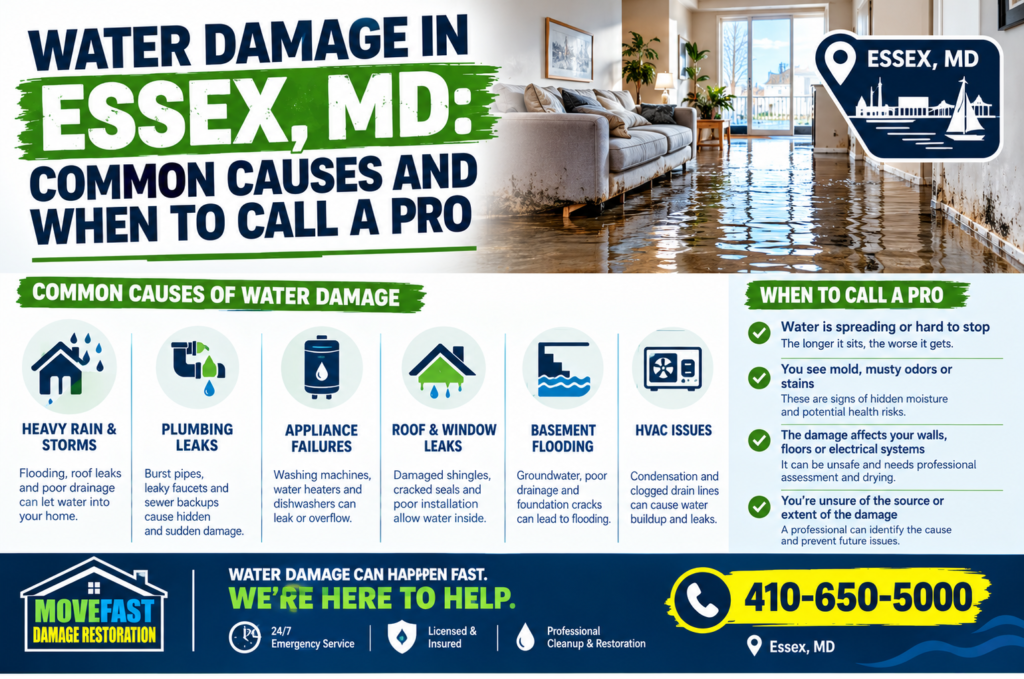
Heavy Rain and Groundwater
After a long storm, saturated soil pushes water toward your foundation. It enters through floor-wall joints, small cracks, window wells, and the floor itself. If you notice damp spots on the basement floor or a musty smell after rain, groundwater is likely getting in. This is the most common reason people search for basement flooding Essex.
Sump Pump Failure
A sump pump is only useful if it is running. Power outages during storms, stuck float switches, clogged pits, and worn-out motors all lead to overflow. If your pump has not been tested in a while, do it before the next big forecast.
Burst or Leaking Pipes
Older supply lines can corrode and fail. In winter, a pipe in an unheated area can freeze and split, then flood the home as soon as it thaws. A slow leak behind a wall can go on for weeks, quietly soaking drywall and insulation.
Water Heater and Appliance Failures
Water heaters, washing machines, dishwashers, and refrigerator ice-maker lines are frequent sources. A water heater that is more than ten years old deserves a closer look. Small drips at hoses and valves are a warning sign.
Sewer and Drain Backups
During heavy rain, municipal sewer lines can be overloaded, and sewage can back up through floor drains and low fixtures. Sewage water is contaminated and should not be cleaned up casually.
Roof and Window Leaks
Wind-driven rain can find its way past damaged shingles, flashing, or window seals. Water often travels along rafters before showing up as a ceiling stain far from the real leak.
Signs You Have Water Damage
Not all water damage is dramatic. Look for:
- Stains on ceilings or walls, especially brown or yellow rings.
- Peeling paint or bubbling wallpaper.
- Warped or cupped floors, or tiles that are loose.
- A musty smell that does not go away.
- Visible mold or mildew.
- Higher than usual water bills.
- The sound of dripping or running water when everything is off.
What You Can Do Yourself
For a small spill or a minor, quickly caught leak of clean water, you can usually handle it on your own:
- Stop the source and shut off the water if needed.
- Mop up and vacuum standing water with a wet/dry vacuum.
- Move furniture and belongings out of the wet area.
- Run fans and a dehumidifier.
- Check the area again the next day and a few days later for dampness or odor.
When to Call a Pro
There is a point where DIY becomes risky or just ineffective. Call a professional if any of these apply:
- The water covers a large area or is more than an inch or two deep.
- It soaked carpet, padding, drywall, or insulation.
- It came from a sewage backup or outside flooding.
- It has been sitting for more than a day.
- Electrical outlets or appliances were exposed to water.
- You smell mold or see growth.
- You do not know where the water is coming from.
- You plan to file an insurance claim and need proper documentation.
If you are searching for Essex MD flood cleanup, you are probably already past the point where a few towels will help. A professional team brings extraction equipment, air movers, dehumidifiers, and moisture meters to remove the water and dry out structural materials, not just the surface.
What Professional Cleanup Involves
- Inspection and moisture mapping to find where the water went.
- Water extraction to remove standing water quickly.
- Removal of materials that cannot be saved, such as wet padding or soaked drywall.
- Drying with air movers and dehumidifiers, with moisture checks along the way.
- Cleaning and disinfecting affected areas.
- Documentation for your insurance company.
Protecting Your Essex Home Going Forward
You cannot control the weather, but you can lower your risk.
- Test your sump pump regularly and add a battery backup.
- Clean gutters and extend downspouts away from the foundation.
- Grade the soil so water flows away from the house.
- Replace old supply hoses with braided stainless lines.
- Know where your main water shutoff is and make sure everyone in the home does too.
- Insulate pipes in unheated spaces and let faucets drip in a deep freeze.
- Consider a backflow valve if sewer backups are a concern.
- Install water sensors near the water heater, washer, and sump pit.
A Note on Flood Insurance
Standard homeowners policies often do not cover flooding from rising water or surface runoff. Because Essex has many properties near the water, it is worth asking your agent exactly what your policy covers and whether separate flood coverage makes sense for your home. Do this before a storm, not after.
The Bottom Line
Water damage in Essex, MD is common, but it does not have to become a disaster. Know the likely causes, act quickly when something goes wrong, and bring in help when the problem is bigger than a mop and a fan. The sooner water is removed and the structure is dried, the less likely you are to face warped floors, ruined drywall, and mold.
Mold Is the Follow-Up Problem
Essex summers are warm and humid, which gives mold a head start in any space that stays damp. If a basement or bathroom has been wet for more than a day or two, check behind baseboards, under carpet, and along the bottom of walls for musty smells or dark spots. Quick drying is the best prevention, and it is much easier than removing mold after it has spread through drywall or insulation.
Document Before You Clean
Whatever the cause, take photos and video before you start moving things, and keep receipts for any emergency work. If you file a claim, your insurer will want to see the condition of the home and a record of what was done. Writing down the date and time you first noticed the problem also helps.
If your Essex home has water damage, learn more on our water damage service page.