

Your storm preparations for an onslaught of bad weather can be easily thrown into chaos and disruption if heavy rain and severe storms turn into your worst nightmare. Water is no friend to the walls, floors, furniture, or electrical systems in your house – and can pose an even greater threat to the integrity of your entire home.
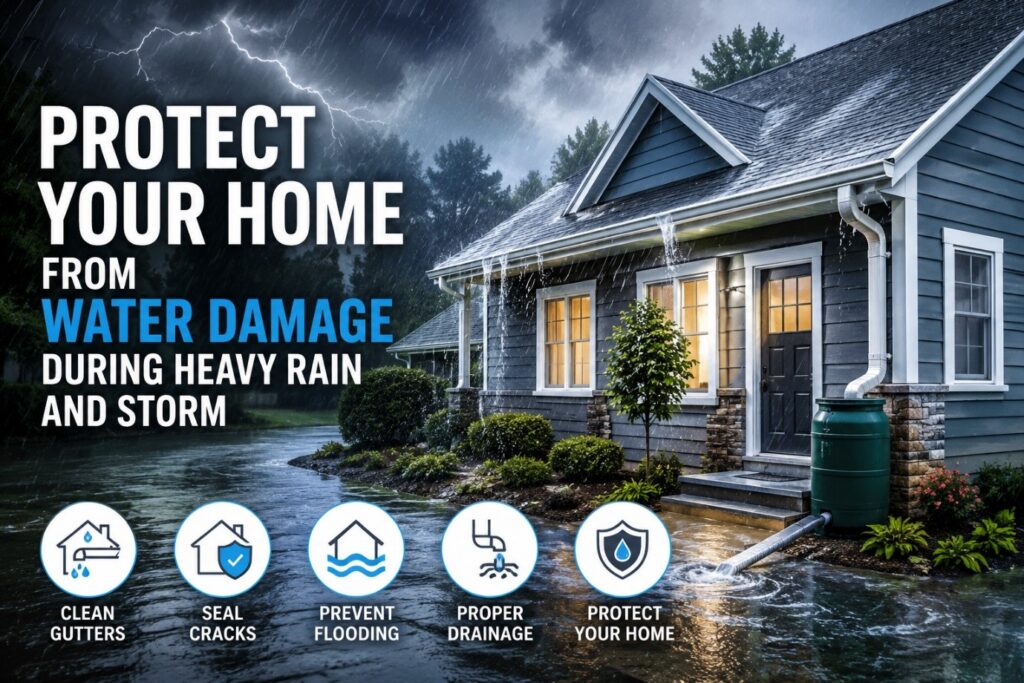
No house can escape damage in a storm, but water damage prevention measures will go a long way toward ensuring your repairs don’t turn into a financial burden. Regardless of where you live, whether you experience annual storms or merely the occasional downpour, preparation can significantly lessen storm water damage.
Inspect and Maintain Your Roof
Rain isn’t much to worry about until it’s got an entry point, like a roof opening. When such an opening occurs-perhaps through a cracked piece of roofing or a lost shingle-the results can be serious and include substantial roof leaks.
Before summer weather brings on potential thunderstorms, take time to check your roof for such problems as: loose shingles, worn sections of roofing, blockage in your roof’s valleys, and damaged roof flashing-then call us for repairs as soon as you find a potential problem.
Keep Gutters and Downspouts Clear
Debris, leaves, and branches in your gutters can trap rainwater, causing water to pool near your foundation. This can eventually lead to basement flooding and damage to the foundation and home.
Keep your gutters cleaned a couple of times a year, and make sure your down spouts are far enough away from the foundation to properly direct water.
Seal Windows, Doors, and Foundation Cracks
This is moisture that commonly travels into the home through cracks surrounding doors, windows, or even the walls of your foundation. You will need to periodically survey these locations to ensure there aren’t any areas that could use a refresh of waterproof sealant or caulk.
Catching any cracks and openings will enable the home to combat storm water damage with fewer issues the next time that it begins to rain.
Protect Your Basement
Basements pose even a higher risk during storms since rainwater collects around the building at basement levels. So, installing a sump pump, checking to make sure all the drain lines work, as well as waterproofing your walls will lower your risk of basement flooding. Also, make sure all important items in your basement are placed high enough so they are above the floor just in case of a flood.
Prepare Your Yard for Heavy Rain
Your landscaping can be a key element in flood prevention. Grade your yard to be sure that any water that falls around your home flows away from the house instead of towards your house.
Clear dead tree branches from your property before they may fall and clog storm drains during storms, and be sure storm grates are kept cleared of leaves and trash.
Act Quickly After Water Damage
Even with the most attentive prep work, sometimes severe weather takes out the battle defences and causes damage. If your basement or structural foundation seems constantly soaked and wet to the touch or if you detect any standing water or soggy drywall, don’t procrastinate.
Acting immediately during an emergency restoration event allows you to reduce further damage, inhibit mold proliferation, and safeguard the core structural integrity of your entire house. Experienced and certified professionals use commercial drying instruments and tools to eliminate hidden moisture.
Don’t Ignore Small Warning Signs
Small concerns – such as a musty door in the house, damp spots on a wall, flaking paint, or a minor roof leak – might go unnoticed, but they generally signify moisture entering a property somewhere. By tending to the details promptly, costly water repairs, as well as those associated with storm damage repairs, will be much less likely.
Water damage prevention is cheapest when it consists of regular check-ups and maintenance
Conclusion
Storms May Be Unpredictable – Your Preparation for the Weather Won’t Be! While you can’t control when and where an emergency storm occurs, you certainly can prepare your house in advance to save time and money by properly implementing water damage prevention to your home, improving home flood protection, and securing necessary flood prevention steps. If the worst occurs due to storm water damage or excessive downpours, it’s of utmost importance to restore your Baltimore area home as soon as possible.
Luckily, Move Fast Restoration is the answer you’re looking for with emergency, fast-response restoration services for any flood damage or mold removal your home might encounter from the storm.
FAQ
What are the best ways to protect my home from water damage during heavy rain and storms?
Regular roof inspections, cleaning gutters and downspouts, sealing windows and doors, checking foundation cracks, protecting the basement, and improving yard drainage can help reduce the risk of storm water damage.
How can I prevent roof leaks during a severe storm?
Inspect your roof for loose or missing shingles, worn roofing sections, blocked roof valleys, and damaged flashing before storm season. Repairing these issues early can help prevent roof leaks during heavy rain.
How can cleaning gutters and downspouts help prevent storm water damage?
Keeping gutters and downspouts clear of leaves, branches, and debris allows rainwater to drain properly away from your home. This can help reduce water pooling near the foundation and the risk of basement flooding.
What can I do to prevent basement flooding during heavy rain?
Installing and maintaining a sump pump, checking drain lines, waterproofing basement walls, and keeping important belongings elevated above the floor can help reduce the risk of basement flooding.
How can I protect windows, doors, and foundation cracks from storm water damage?
Regularly inspect windows, doors, and foundation areas for cracks or openings and refresh waterproof sealant or caulk where needed. Sealing these entry points can help prevent rainwater from entering your home.
What should I do if my home has standing water after a heavy storm?
Act quickly and contact a professional restoration service. Prompt water removal and drying can help reduce further property damage, prevent mold growth, and protect your home’s structural integrity.
Can Move Fast Restoration help with storm water damage and emergency restoration in Baltimore?
Yes, Move Fast Restoration provides emergency, fast-response restoration services for Baltimore-area homes affected by storm water damage, flood damage, and mold issues.