

You dried up the puddle, moved the soggy rug, and figured the problem was solved. Then, a week later, a musty smell shows up in the room. This is the moment many homeowners ask: how fast does mold grow after water damage, and is it already too late?
The short answer is that mold can start growing in as little as a day or two on a damp surface, and it becomes more visible and harder to remove the longer moisture hangs around. The good news is that you have some control. This guide explains the timeline, what mold needs, and what to do if you suspect it in your Baltimore home.
How Fast Does Mold Grow After Water Damage?
Mold spores are everywhere, indoors and out. They float in the air and settle on surfaces all the time without causing trouble. What they need to turn into active growth is moisture, a food source, and the right conditions. Water damage supplies the moisture, and your home supplies plenty of food: drywall paper, wood, insulation, carpet, and dust.
Here is a general timeline of what can happen:
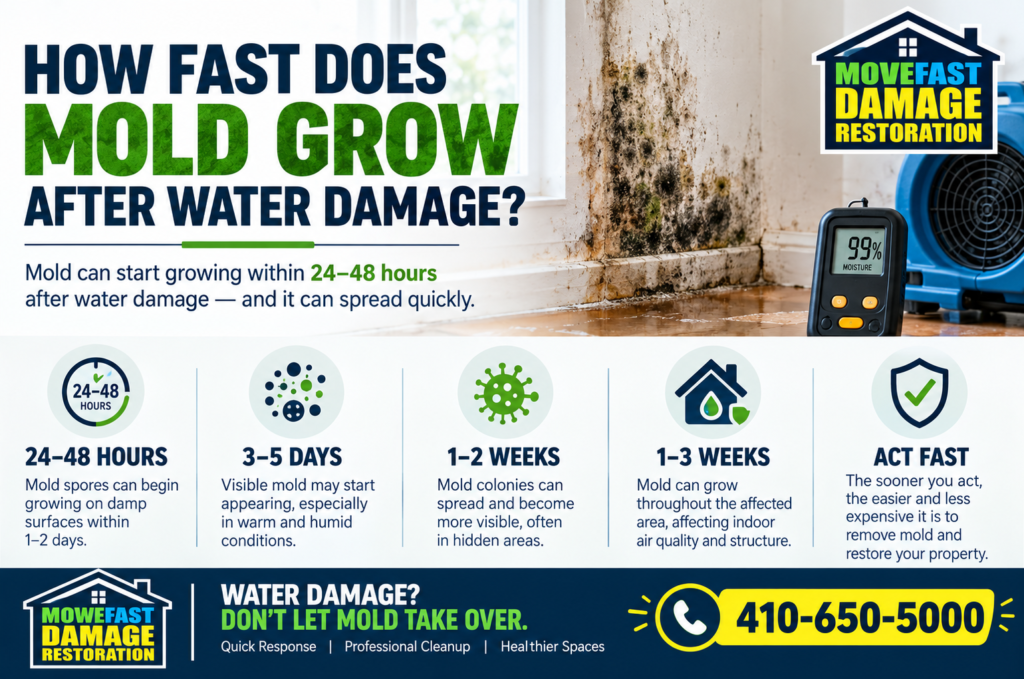
- 0 to 24 hours: Materials are wet. Spores are present, but growth has usually not taken hold yet. This is the best window to dry things out.
- 24 to 48 hours: Mold can begin to establish itself on wet surfaces, especially in warm, humid, or poorly ventilated spaces. It may be too small to see.
- 2 to 7 days: Growth becomes more likely, and colonies may be visible as spots or fuzzy patches. A musty odor often appears.
- One to two weeks: Mold can spread across materials, grow into porous surfaces, and release more spores into the air.
- Beyond two weeks: Untreated mold can cause lasting damage to building materials and may require removal and replacement of affected areas.
These are general ranges, not guarantees. How quickly mold appears depends on the temperature, humidity, the materials involved, and how wet things stayed. A flooded basement in August can see growth faster than a small spill on a hard floor in winter.
What Mold Needs to Grow
- Moisture. This is the one you can control. Without a damp surface, mold cannot thrive.
- A food source. Organic materials such as wood, paper, cardboard, and fabric work well.
- Temperature. Most molds like the same range that people do, roughly 60 to 80 degrees.
- Time. Given a few days of the above, spores turn into colonies.
Take away the moisture quickly and you interrupt the whole process. That is why drying is more important than cleaning in the early days after a leak.
Mold After a Leak: Where It Hides
The scary thing about mold after a leak is that the visible damage is often the smallest part of the problem. Water travels, and mold grows where it is dark, damp, and undisturbed.
- Inside walls, behind baseboards, and under wallpaper.
- Under carpet and padding, and beneath laminate or vinyl flooring.
- Behind cabinets and under sinks.
- In ceiling cavities beneath a leaking roof or a bathroom above.
- In basements and crawl spaces with poor airflow.
- Around HVAC ducts, where condensation and humidity collect.
If you had a leak and you now notice a smell but cannot see anything, hidden moisture is a prime suspect.
Signs of Mold After Water Damage
- A musty, earthy odor that returns even after cleaning.
- Spots or patches in colors such as black, green, white, gray, or brown.
- Paint that bubbles, peels, or discolors.
- Walls that feel damp or soft.
- Warped baseboards or flooring.
- New allergy-like symptoms such as sneezing or irritated eyes when you are in a specific room.
Some people are more sensitive to mold than others. Children, older adults, and anyone with asthma, allergies, or a weakened immune system should be especially careful around damp, moldy areas.
What to Do Right After Water Damage to Prevent Mold
The steps you take in the first couple of days matter most when it comes to mold after water damage.
- Stop the source of the water.
- Remove standing water as quickly as possible.
- Remove soaked items that cannot be dried, such as padding, cardboard, and wet insulation.
- Begin drying right away with fans, dehumidifiers, and ventilation.
- Use a moisture meter, or have a pro check, to confirm walls and floors are truly dry.
- Keep indoor humidity below about 50 percent where you can.
- Watch the area for several weeks for smells, stains, or new damp spots.
Do not cover wet materials with paint, new flooring, or caulk. Sealing in moisture practically invites mold.
What If You Already See Mold?
Do not panic, but do not ignore it either. The right response depends on how much there is and where it is.
- A small patch on a hard, non-porous surface, such as tile, can often be cleaned with detergent and water. Wear gloves and a mask, and make sure the area is ventilated.
- Mold on porous materials such as drywall, ceiling tile, carpet, or insulation usually cannot be cleaned effectively. These materials generally need to be removed and replaced.
- Large areas, mold that keeps coming back, or mold you smell but cannot find all call for professional help.
Avoid disturbing mold more than necessary. Scrubbing or brushing dry mold can send spores into the air and spread the problem. Also avoid mixing cleaning products, which can create dangerous fumes.
Why Bleach Is Not the Answer
Many people reach for bleach as soon as they see mold. On non-porous surfaces it can remove the color, but it does not solve the moisture problem, and on porous materials it does not reach the roots of the growth. If moisture is still there, mold can return. Fixing the moisture, then removing affected materials where needed, is the real solution.
When to Call a Professional
Bring in help when:
- The water damage was large, or it sat for more than a day or two.
- The water came from a sewage backup or flooding.
- You smell mold but cannot find the source.
- Mold covers a large area or has spread into walls or ceilings.
- Someone in the home has health concerns.
- You are filing an insurance claim and want the moisture and damage documented.
A professional can map the moisture, find hidden pockets, remove affected materials safely, and dry the structure so the problem does not return. In a humid Baltimore summer, that extra care helps.
Key Takeaways
- Mold can begin to grow within 24 to 48 hours of a water event if materials stay wet.
- Moisture is the one factor you can control, so dry fast.
- Hidden moisture in walls, floors, and ceilings is the usual reason mold appears later.
- Porous materials that stayed wet often need to be replaced, not cleaned.
- When in doubt, get the area checked.
Humidity Makes a Difference
In Baltimore, summer humidity can stay high for weeks, which makes it harder for damp materials to dry on their own. A room that would dry in a couple of days in dry weather may stay damp far longer when the air is already heavy with moisture. Running a dehumidifier and keeping air moving gives the structure a fighting chance. After any leak, keep an eye on the area for a few weeks, because mold that starts hidden often shows itself later.
If you are dealing with a leak or flooding and want to keep mold from setting in, see how we help on our water damage service page.