

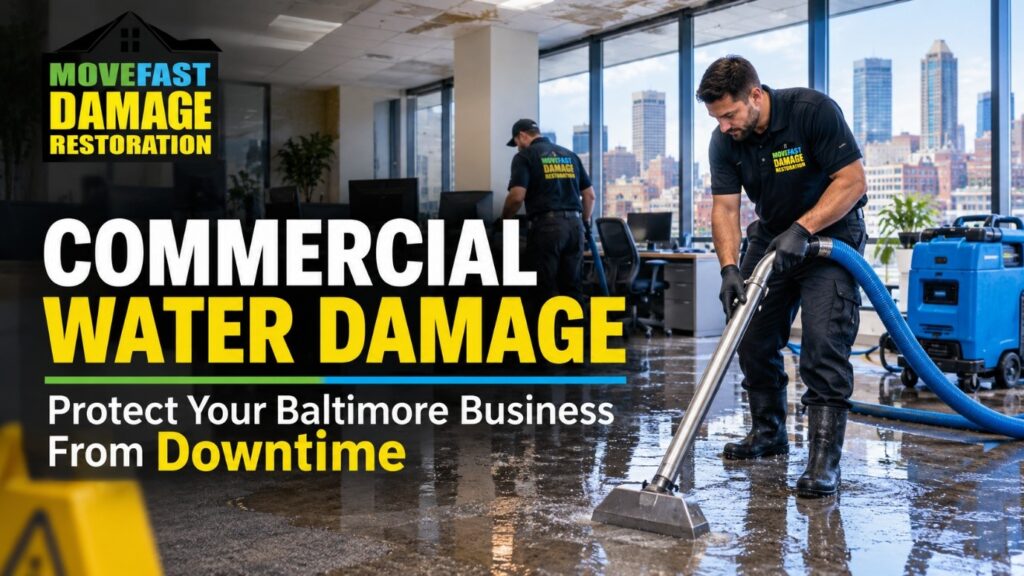
When a pipe bursts at home, it is a crisis. When it happens at your business, it is a crisis with a clock on it. Every hour the doors are closed, you lose sales, productivity, and customer trust. If you are wondering about commercial water damage what to do first, the answer is to protect people, stop the water, and move quickly toward drying and reopening.
This guide is written for Baltimore business owners and property managers. It covers the immediate steps, how to reduce downtime, and how to prepare before something goes wrong.
Why Commercial Water Damage Is Different
Water damage in a business is more complicated than in a house for several reasons:
- Larger spaces. More square footage means more water, more materials, and more drying equipment.
- More at stake. Inventory, equipment, records, and customer-facing areas can all be affected.
- Multiple parties. Tenants, landlords, property managers, and insurers may all be involved, and responsibilities can be unclear.
- Complex systems. Fire sprinklers, HVAC, elevators, server rooms, and shared walls can all be touched.
- Safety and compliance. Staff and customers must be kept safe, and some businesses have regulatory requirements.
- Downtime costs. Closed doors mean lost revenue every day.
Common Causes in Commercial Buildings
- Burst or leaking pipes, including those in ceilings and walls shared with other units.
- Sprinkler system activations or failures.
- HVAC condensation and drain line clogs.
- Roof leaks, especially on flat commercial roofs.
- Restroom and kitchen plumbing failures, including overflowing toilets and grease line backups.
- Storm runoff and flooding in lower levels and parking garages.
- Sewer backups.
- Leaks from the unit above in multi-tenant buildings.
Commercial Water Damage: What to Do First
Here is the order of operations when water hits your business.
- Protect people. Evacuate if there is a safety concern. Keep staff and customers away from wet floors, electrical hazards, and areas where the ceiling may sag.
- Shut off electricity to affected areas if it is safe to do so, and call an electrician if needed.
- Stop the water. Close the nearest shutoff or the main valve. If you are a tenant, contact building management right away to find shutoff locations.
- Document. Take photos and video of the damage, the source, and affected inventory and equipment before moving anything.
- Notify your insurance company and your landlord or property manager as soon as possible.
- Protect important items. Move inventory, documents, and electronics to dry areas if it is safe.
- Call a professional team to extract the water and begin drying.
Business Flood Recovery: Reducing Downtime
Business flood recovery is a race. The faster water is removed and the structure is dried, the sooner you can reopen, and the fewer materials need replacing. Here is what helps most.
Act Within Hours, Not Days
Drywall, ceiling tiles, carpet, and insulation start to deteriorate quickly. Within a day or two, mold can begin growing in damp areas. Calling for help immediately gives you the best shot at saving materials and keeping repairs smaller.
Ask for a Phased Plan
You may not need to shut down the whole building. A good crew can often contain the affected area, set up barriers, and dry it while the rest of the space keeps operating. Ask whether work can be done in phases, after hours, or in sections to keep part of the business running.
Prioritize Critical Areas
Tell the team what matters most: a point-of-sale area, server room, kitchen, or loading dock. Identifying the spaces that you need back first lets the crew focus on them and helps you plan a partial reopening.
Keep Records for Your Insurer
Ask your restoration team to document moisture readings, equipment, and the work performed. Keep track of lost inventory, damaged equipment, and, if your policy includes business interruption coverage, the hours and revenue lost. Ask your agent what your policy covers before an event happens, not after.
Commercial Water Damage Cleanup: What the Process Looks Like
Professional commercial water damage cleanup follows a clear sequence.
- Assessment. Technicians inspect the building, identify the source and type of water, and use moisture meters to map how far it spread.
- Water extraction. Pumps and extractors remove standing water from floors and surfaces.
- Removal of damaged materials. Wet ceiling tiles, insulation, carpet, and drywall that cannot be saved are removed so the structure can dry.
- Structural drying. Air movers and commercial dehumidifiers dry the space while readings are checked regularly.
- Cleaning and sanitizing. Surfaces are cleaned, and contaminated areas are disinfected.
- Odor and mold control. Moisture issues are resolved so mold does not take hold.
- Documentation and rebuild coordination. Records are provided for insurance, and repairs are planned.
Special Concerns for Businesses
- Restaurants and food businesses. Contaminated water can affect food safety and may require inspection before reopening.
- Offices. Computers, servers, and paper records are vulnerable. Back up data regularly and keep copies off site.
- Retail. Inventory and displays can be lost quickly. Elevate stock off the floor where possible.
- Medical and professional offices. Patient records and equipment need careful handling.
- Multi-tenant buildings. Water spreads between units, so coordinate quickly with the property manager.
Create a Plan Before It Happens
The best protection against downtime is preparation. A short emergency plan can save hours when every minute counts.
- Locate and label water shutoffs, electrical panels, and sprinkler controls. Make sure key staff know where they are.
- Keep a contact list with your landlord, property manager, insurance agent, plumber, electrician, and a restoration team.
- Review your insurance policy, including property, business interruption, and flood coverage.
- Keep photos or a video inventory of your space, equipment, and stock.
- Back up important data and store key documents off site or in the cloud.
- Inspect roofs, plumbing, HVAC drain lines, and water heaters on a regular schedule.
- Install water leak sensors in storage rooms, server rooms, restrooms, and near mechanical equipment.
- Train employees on what to do if they discover a leak.
Communicate With Customers and Staff
If you have to close or reduce hours, tell people right away. A simple message on your website, social media, and phone line prevents confusion and shows customers that you are on top of things. Keep staff informed about when they can return and what to expect.
The Bottom Line
You cannot prevent every pipe from bursting or every storm from hitting Baltimore, but you can control how quickly you respond. Protect people, stop the water, document the damage, and bring in a team that can dry the building fast. The sooner you act, the sooner your doors can open again.
Questions to Ask Before Work Begins
- Can the work be phased so part of the business stays open?
- How will you protect areas that were not affected?
- Will you work after hours or on weekends if needed?
- How will you coordinate with the property manager and other tenants?
- What records will you provide for my insurance company?
Clear answers to these questions help you plan around the work and keep customers and staff informed.
If your Baltimore business has been hit by water, see how we can help on our water damage service page.