

After paying for professional mold remediation, the last thing any homeowner wants to discover is mold coming back after removal in the same spot a few months later. Unfortunately, it does happen, and when it does, it’s rarely because the original remediation work was done poorly. More often, it’s because something in the environment that allowed mold to grow in the first place was never fully resolved. Understanding why mold returns, and what actually prevents it, makes a real difference in protecting the investment made in remediation the first time around.
The Most Common Reason: Unresolved Moisture
Mold needs moisture to grow, full stop, and removing visible mold colonies doesn’t do anything to fix a leaky pipe, poor ventilation, or a grading issue that’s still sending water toward a foundation wall. If the moisture source that caused the original growth wasn’t identified and permanently fixed, whether during the remediation or separately by a plumber or contractor, the conditions that produced mold the first time are still present, and mold spores are essentially everywhere in the environment waiting for those conditions to return.
How to Tell Recurrence From a Brand-New Problem
It’s not always obvious, when mold shows up again, whether it’s the same colony that never fully went away or a completely separate issue somewhere nearby. Location is often the clearest clue: mold appearing in the exact same spot, especially within the first few months after remediation, points toward incomplete removal or an unresolved moisture source. Mold showing up somewhere new, or appearing well over a year later, is more often a fresh issue tied to a new leak or a seasonal humidity spike, and it’s worth mentioning this distinction to whoever inspects it, since it changes what they’ll look for.
Incomplete Remediation
Mold that’s grown into porous materials, drywall, insulation, wood framing, sends structures called hyphae deep into the material itself, not just across the surface. If contaminated porous materials weren’t fully removed during remediation, and only surface-level cleaning was done instead, remaining mold within the material can regrow once conditions are right again. This is part of why a thorough remediation process involves actually removing and replacing certain materials rather than just treating everything in place.
Humidity and Ventilation Issues
Indoor humidity above 60 percent creates conditions where mold can establish itself even without an active leak, simply from ambient moisture in the air. Bathrooms without adequate ventilation, basements without dehumidification, and homes with generally poor air circulation are all more prone to this kind of ongoing risk. Baltimore’s humid summers make this a particularly relevant concern for area homeowners, since outdoor humidity adds to whatever’s already happening inside.
New Water Events
A new leak, a new area of flooding, or even a period of high humidity following remediation can create a fresh mold problem, sometimes in the same area as before and sometimes somewhere new entirely. This isn’t really the mold “returning” so much as new growth from a new moisture event, but it’s worth understanding as a distinct category, since it means ongoing vigilance matters even in a home that’s already been through remediation once.
How to Prevent Mold From Returning
Address the Root Cause First
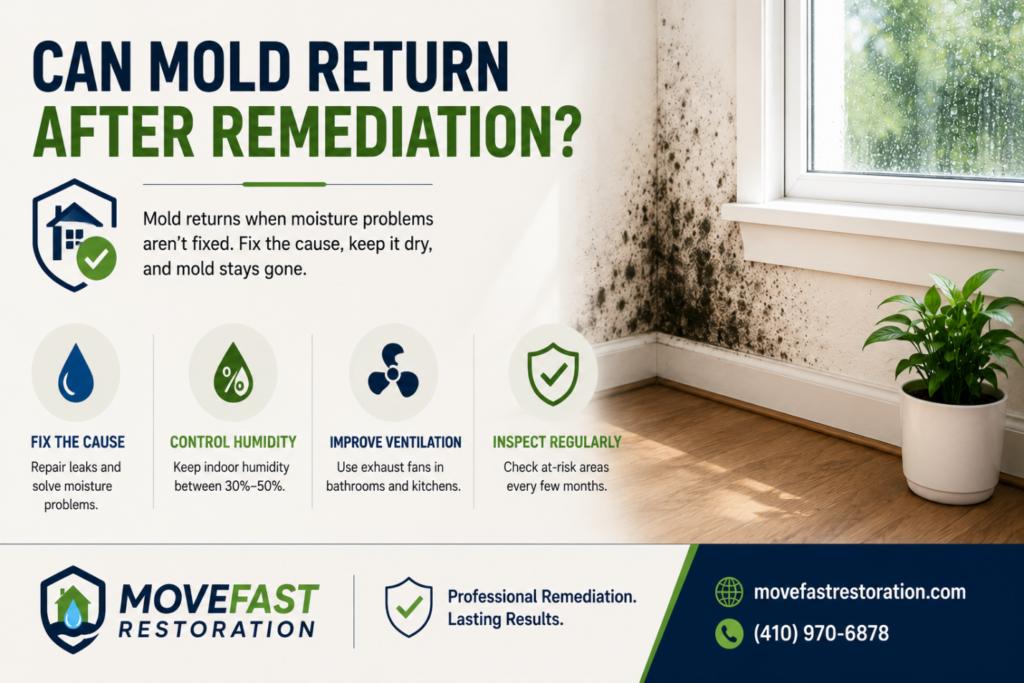
Before or during remediation, the actual source of moisture needs to be identified and fixed, whether that’s a plumbing repair, roof work, grading correction, or ventilation improvement. Skipping this step, or treating it as optional, is the single biggest predictor of mold reappearing later.
Control Indoor Humidity
Keeping indoor humidity between 30 and 50 percent, using a dehumidifier in basements or other prone areas, and running exhaust fans in bathrooms and kitchens all help keep the air itself from becoming a moisture source.
Improve Ventilation
Making sure bathrooms, kitchens, and laundry areas have functioning exhaust ventilation to the outside, rather than just into an attic space, reduces the moisture load in those rooms significantly.
Monitor Previously Affected Areas
Checking areas that previously had mold every few months for the first year or two after remediation, watching for any sign of returning moisture or discoloration, catches a recurrence early if one is going to happen.
Schedule Regular Inspections
An annual inspection, particularly for homes with a history of moisture issues, catches small problems before they become mold problems again, and is a lot less expensive than a second full remediation.
When to Call for Help Again
Any sign of returning mold, a musty smell in a previously treated area, visible discoloration, or health symptoms that echo what a household experienced before, is worth addressing quickly rather than waiting to see if it’s really coming back. Acting early the second time around is just as important as it was the first time.
What a Good Remediation Company Should Guarantee
When choosing who to work with, whether for the first remediation or a follow-up, it’s reasonable to ask about post-remediation verification testing, whether the company identifies and addresses moisture sources as part of the process rather than treating that as a separate job, and what kind of warranty or guarantee backs up the work. A company confident in its process should be willing to answer all three questions clearly and specifically, not with vague reassurances.
Long-Term Mold Prevention Support
MoveFast Restoration doesn’t just remediate mold, the team works with Baltimore-area homeowners to identify and resolve the underlying moisture issues that cause it, which is the part of the process that actually determines whether mold stays gone. If you’re dealing with a recurrence or want a follow-up inspection after previous remediation, reach out through movefastrestoration.com to schedule a visit.